

2026 is shaping up to be the year everyone talks about carefully.
Not loudly.
Not with preorder links and countdown clocks.
But with that tone people use when they’ve been burned before and learned something from it.
This isn’t the year of “next holiday is going to be insane.”
It’s the year of “okay… show me.”
Which already tells you a lot.
Because the biggest games aimed at 2026 aren’t just games.
They’re trust tests. Memory tests. Patience tests.
And whether they land or not might say more about us than about them.
2026 Feels Less Like Hype and More Like Accountability
Something shifted.
Cinematic trailers don’t carry the same weight anymore.
Roadmaps don’t calm people down.
“Built from the ground up” barely registers.
Now the first question is always the same:
Who’s making this, and what have they done lately?
That question hangs over every major 2026 release.
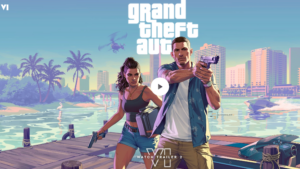
Grand Theft Auto VI — The Exception That Proves the Rule
GTA VI is the only game that still warps gravity.
It doesn’t need convincing language.
It doesn’t need developer diaries.
It just exists, and everything else politely steps back.
What’s interesting isn’t the scale (we assume that).
It’s the restraint.
Rockstar didn’t over-explain.
They didn’t over-promise.
They let silence do the work.
In 2026, that almost feels radical.
Resident Evil Requiem — Horror That Doesn’t Need to Yell Anymore
Resident Evil doesn’t chase hype the way it used to.
And Requiem feels like the quietest confidence move the series has made in a while.
There’s no sense of panic here.
No desperate reinvention.
Just a franchise that knows exactly what it is and what it doesn’t need to prove anymore.
What’s interesting is how little people are arguing about what kind of Resident Evil this will be.
That used to be the whole conversation.
First-person vs third-person.
Action vs horror.
Old fans vs new fans.
Now?
It’s more like a collective nod. Yeah. This makes sense.
Requiem feels less like a sequel and more like a tone check.
Slower. Heavier. More deliberate.
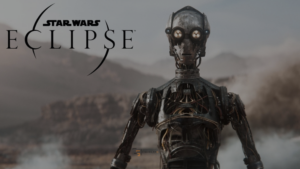
Star Wars Eclipse — Can a Reputation Be Rewritten?
This one’s complicated.
It has one of the biggest IPs in entertainment history.
And one of the most debated studios behind it.
So the conversation isn’t really about gameplay.
It’s about credibility.
People aren’t asking “Is this ambitious?”
They’re asking, “Is this different?”
In 2026, legacy alone isn’t enough, but it still opens the door.
What 2026 Actually Reveals About Us
Players don’t just want good games anymore.
They want honest ones.
They want:
-
Fewer promises
-
Fewer buzzwords
-
Fewer attempts to control the narrative
And more moments where a game simply shows up and lets people react naturally.
The conversation now matters as much as the product.
Games don’t launch into silence; they launch into group chats, streams, Discords, and comment sections.
They live or die there first.

This Isn’t Cynicism. It’s Pattern Recognition.
People still love games.
Deeply.
They’re just better at spotting marketing noise now.
So 2026 doesn’t feel like a comeback year.
It feels like a reckoning year.
The studios that respect that will thrive quietly.
The ones that don’t will be very loud and very brief.
And everyone else will be watching, controller in hand, saying nothing yet.
Because in 2026, excitement isn’t gone.
It’s just earned yet.