
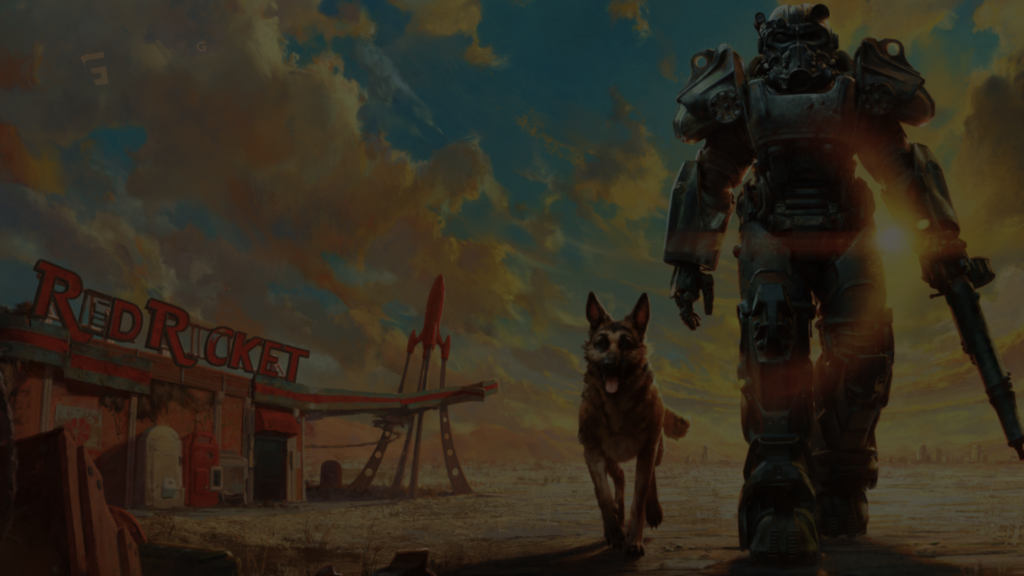
I figured I’d watch a couple of episodes of Fallout Season 2, nod politely at some references, and move on with my life like a normal, functioning adult.
Instead, I finished it and immediately opened Steam like a man about to disappear into a 90-hour side-quest spiral.
This isn’t a recap. It’s not a review score. It’s not me breaking down cinematography or pacing like I went to film school.
It’s me admitting that this show just made me want to go back underground.
Again.
The Vibes Were Too Accurate
From the first episode, the show feels like it understands Fallout.
Not in a “look, we included a Pip-Boy!” way.
In a “this world is weird, dark, funny, tragic, and morally messy all at once” way.
Every time I recognized something, a design choice, a faction dynamic, the way a character talks about the wasteland, it didn’t feel like fan service.
There’s a difference.
Season 2 especially leans into that tonal chaos. One scene feels like a dead-serious survival drama. The next feels like a dark comedy about humanity’s dumbest decisions.
And that whiplash? That’s Fallout.
It reminded me why I loved playing Fallout 4 in the first place. Not because it was “the best RPG ever made.”
But because it felt like a world that didn’t care about me, and yet somehow revolved around the choices I made.

Vault Energy Is Different
Every time Season 2 introduced a new vault, I got that same little spike of excitement I used to get exploring one in-game.
You know the feeling.
You find a door half-buried in rubble. You pop open the entrance. The lighting changes. The music gets eerie.
And suddenly you’re not just looting.
Vaults are Fallout at its most fascinating.
Some are hopeful. Some are horrifying. Most are both.
The show absolutely nails that tone.
The sterile corridors. The propaganda optimism. The unsettling sense that something is slightly off.
It made me want to dive back into the lore, the failed experiments, the moral compromises, the “we thought this was a good idea at the time” energy.
And that’s dangerous.
Because once you start reading vault lore, you don’t stop.
This Feels Like the Next Step, Not Just an Adaptation
A lot of game-to-TV adaptations feel like field trips.
“Come look at this cool world from your favorite game!”
Season 2 doesn’t feel like that.
It feels like Fallout evolving.
Like this universe always had more stories to tell outside of a quest log.
The show expands the world without diluting it. It treats the source material like a foundation, not a checklist.
And somehow it captures the player energy of Fallout.
That constant question: who are you going to be out here?
The Psychology of the Wasteland
The wasteland is chaos.
No rules. No real structure. No guaranteed justice.
And yet that’s what makes it compelling.
You choose if you’re going to be the hero, the opportunist, the raider, the neutral trader just trying to survive.
The show leans into that moral ambiguity in a way that feels incredibly authentic to the games.
You meet characters who are:
Evil, but charming.
Funny, but dangerous.
Completely dumb, but somehow still alive.
Brand new to this world and clearly in over their heads.
Cold. Mean. Unpredictable.
That mix is what makes post-apocalyptic worlds feel alive.
Nobody is purely good or purely evil.
They’re just adapting.
Recognition Without Hand-Holding
Another thing the show absolutely crushes: it trusts the audience.
It doesn’t pause to explain every little piece of lore.
It lets vaults be vaults.
It lets factions feel layered.
It lets the world breathe.
That confidence makes the whole thing feel less like an adaptation and more like a continuation.
Which is why it triggered something in me.
Not nostalgia in a cheap way.
But in a “remember how you felt discovering your first vault?” way.
Fallout Still Matters
There’s a reason Fallout refuses to die.
It’s not just the Nuka-Cola aesthetic or the retro-futurism.
It’s the moral sandbox.
It’s the uncomfortable questions.
It’s the weird, unpredictable characters who feel like they’ve been surviving for years before you ever meet them.
Season 2 didn’t just recreate the vibe.
It amplified it.
It made the world feel big again.
Messy again.
Dangerous again.
So… Am I Reinstalling Fallout 4?
Here’s the problem.
I know exactly what happens if I reinstall Fallout 4.
I’ll say I’m just going to “check it out for an hour.”
Then I’ll be reorganizing settlements at 2 a.m.
Then I’ll be reading Vault-Tec terminal entries like they’re sacred texts.
Then I’ll somehow justify a full run because “it’s been a while.”
It’s exciting.
And slightly dangerous.
Because Fallout isn’t just a game you play.
It’s a world you disappear into.
And after Season 2?