
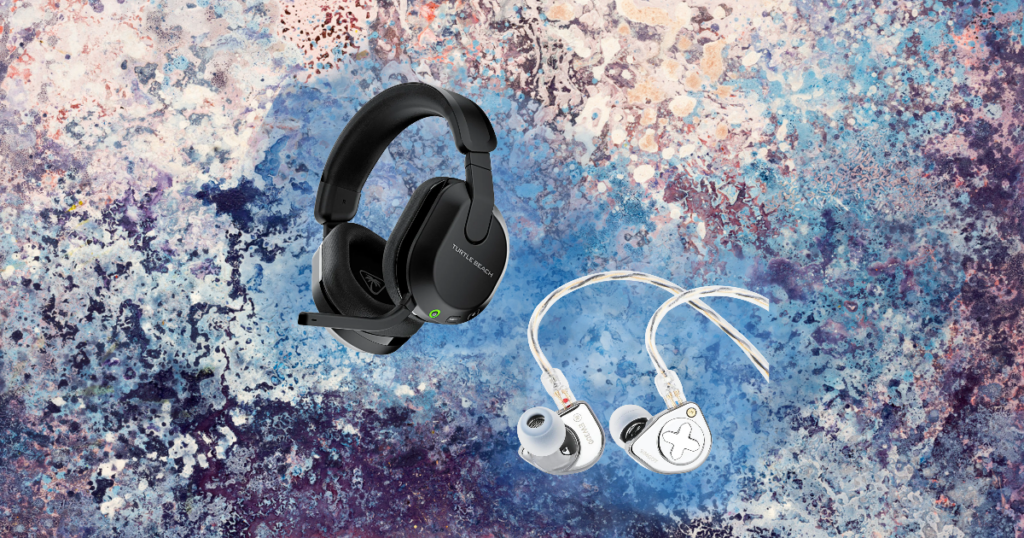
I didn’t switch from a gaming headset to IEMs because I was chasing better footsteps or some competitive advantage.
My glasses were pissing me off.
I’d been using my HyperX Cloud III Wireless for more than a year, and I actually really liked them.
- They sounded good.
- The microphone worked fine.
- They were wireless.
- & I never had some major problem that made me want to replace them.
But after about an hour and a half, I’d start noticing them.
- The earcups pressed my glasses against my head.
- My ears would get hot.
- Then I’d get hot
- My glasses would start fogging
- & suddenly this perfectly good gaming headset was annoying the crap out of me.
Eventually, I switched to the SIMGOT EW300 IEMs.
I didn’t realize how much the headset bothered me until it wasn’t there anymore.
Now?
The HyperX headset belongs to the kids.
So let’s talk about gaming headsets vs. IEMs, because after spending a lot of time with both, I don’t think one is automatically better for everybody.
But I do know which one I’m grabbing.
This post contains affiliate links. If you buy something through one of these links, I may earn a commission at no additional cost to you.

TL;DR
I prefer IEMs.
But comfort is the biggest reason, not sound.
My SIMGOT EW300s and HyperX Cloud III Wireless both sound very, very good to me. I haven’t suddenly started hearing enemies through six walls because I switched to IEMs.
What changed is everything around the sound.
The EW300s:
- Don’t press against my glasses.
- Don’t make my ears hot.
- They’re incredibly light.
- I’ve worn them for four-hour gaming sessions without becoming uncomfortable.
But I gave up wireless and a built-in microphone to get there.
So my recommendation is pretty simple:
Already have a standalone microphone or don’t need one?
I’d go IEM.
Starting from scratch and need headphones and a microphone for around $100?
I’d probably buy a gaming headset.
That’s exactly how I upgraded my own setup.
What Are IEMs?
IEM stands for in-ear monitor.
They look somewhat like earbuds, but instead of simply sitting around your ear, the tips create a seal inside your ear canal.
They’ve been used in professional audio forever, but they’ve become increasingly popular with gamers too.
Gaming headsets take the opposite approach.
They’re usually large over-ear headphones with a headband, earcups, and microphone attached.
A headset is essentially an entire gaming audio setup in one device.
IEMs usually aren’t.
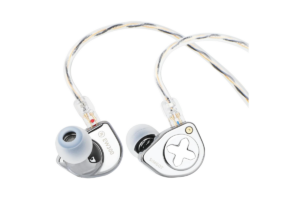
Find them here: Check SIMGOT EW300 price on Amazon
Gaming Headsets Are Way Easier
This is the gaming headset’s biggest advantage.
- Buy headset.
- Put headset on.
- Plug in USB dongle.
You now have audio and a microphone.
My HyperX Cloud III Wireless was incredibly convenient.
- I didn’t need a separate microphone sitting on my desk.
- I didn’t have another cable running from my ears.
- & because it was wireless, I could get up from my computer without ripping something out of my ear.
I miss that.
I generally prefer wireless stuff because I hate unnecessary cables, so going from a wireless headset to wired IEMs was definitely a downgrade in convenience.
But I’m willing to deal with the cable because of everything else I gained.
That doesn’t mean everyone will be.
If your number one priority is simplicity, gaming headsets are hard to beat.
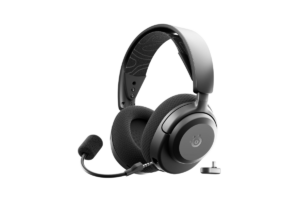
Get them here: Check SteelSeries Arctis Nova price on Amazon
Comfort Is Why IEMs Won Me Over
I wear glasses every day.
With an over-ear headset, the earcups push the arms of my glasses against the side of my head.
At first, it’s fine.
After an hour?
Still manageable.
Once I got somewhere around an hour and a half, though, I’d start getting annoyed.
Then there was the heat.
Large earcups trap heat around your ears. I’d get hot, and once I got hot, my glasses would start fogging.
It’s a pretty stupid problem until you’re trying to play a game while looking through foggy glasses.
When I switched to the EW300s, all of that disappeared.
- There’s nothing wrapped around my ears.
- There’s no headband
- There’s nothing pressing my glasses into my head.
- There’s significantly less weight.
- I’ve gamed for four hours straight with the EW300s in and haven’t felt uncomfortable.
That’s 100% what sold me on IEMs.
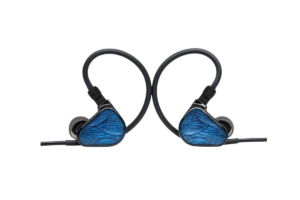
Find them here: Check TRUTHEAR x Crinacle Zero price on Amazon
If You Wear Glasses, Seriously Consider IEMs
If you don’t wear glasses, you might not care nearly as much about the difference.
If you do?
You know.
Over-ear headphones and glasses aren’t always a great combination. The earcups can press against the frames, which then press into the side of your head.
Some headsets handle it better than others, obviously.
My HyperX Cloud III Wireless wasn’t some horribly uncomfortable headset either. I used it for more than two years.
The problem became noticeable during longer sessions.
If glasses are one of your biggest complaints with traditional gaming headsets, IEMs are worth trying for that reason alone.
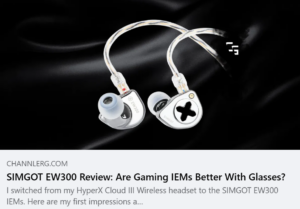
I went much deeper into my experience in SIMGOT EW300 Review: Are Gaming IEMs Better With Glasses?
Do IEMs Actually Sound Better?
Not really.
At least not to me.
My SIMGOT EW300s sound fantastic.
My HyperX Cloud III Wireless also sounded fantastic.
I’ve played:
- The Finals
- Rainbow Six Siege
- Resident Evil 4
- Guardians of the Galaxy
- Detroit: Become Human
- & ARC Raiders
with the EW300s.
- Shooters.
- Story games.
- Atmospheric games.
I’ve put them through pretty much everything I normally play.
And I don’t have some dramatic revelation to report.
Both are very, very solid.
The EW300s have great detail, and I really like how they sound. But I’m not going to sit here and tell you I suddenly became an audio engineer and discovered sounds that my HyperX couldn’t reproduce.
That wasn’t my experience.
The reason I kept reaching for the IEMs was because they gave me the sound quality I wanted without having a giant headset on my head.
That’s the win.
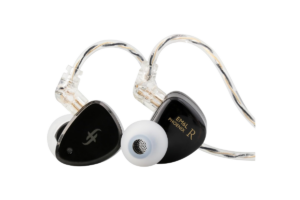
Get them here: Check SIMGOT EM6L price on Amazon
What About Footsteps and Directional Audio?
Good IEMs can have excellent imaging, which is basically how accurately you can tell where a sound is coming from.
That’s obviously useful in games like Siege or The Finals.
But again, comparing my actual experience?
I haven’t noticed some massive competitive advantage.
Both have been good.
- I can hear what’s happening around me.
- I can locate sounds.
- I can play shooters perfectly well with either one.
And I actually had the opposite experience when I first got my EW300s.
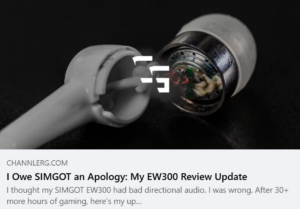
The directional audio seemed completely wrong.
Turns out I had the left and right cables swapped.
I wrote more about that whole experience in I Owe SIMGOT an Apology: My EW300 Review Update
Gaming Headsets Destroy IEMs on Microphone Convenience
My EW300s don’t give me the same simple microphone solution my HyperX headset did.
That’s okay now because I use a FIFINE AM8 PRO-T as my dedicated microphone.
But before I bought a standalone mic?
Losing the headset microphone would’ve been a dealbreaker.
That’s literally why I didn’t make the switch earlier.
I waited until I knew I was ready to move to a dedicated microphone.
And that’s why I wouldn’t automatically tell a new gamer with $100:
“Go buy IEMs right this second”.
If you’ve got $100 total and need both audio and a microphone, I’d probably point you toward a gaming headset.
You’re getting everything you need in one purchase.
Then later, if you get more serious about streaming or gaming and decide you want a standalone microphone anyway, IEMs become much easier to consider.
That’s exactly what I did.
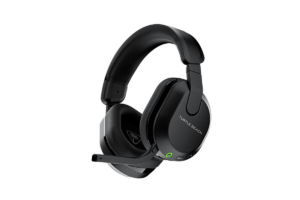
Find them here: Check Turtle Beach Stealth 600 Wireless price on Amazon
Wireless Is the One Thing I Really Miss
With my HyperX headset I could:
- Get up
- Walk around
- Grab something and never think about what was attached to me.
Now I’ve got a wire.
I plug my EW300s into my FIFINE microphone, which keeps things pretty manageable at my desk, but it’s still a wire.
Even with the inconvenience…
I’d rather deal with the wire than go back to wearing the headset.
The comfort difference matters that much to me.
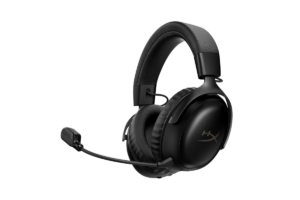
Get them here: Check HyperX Cloud 3 S price on Amazon
IEMs Aren’t Automatically Comfortable for Everyone
I can wear my EW300s for four hours without an issue.
That doesn’t mean you can.
Some people simply don’t like having something inside their ears.
And fit matters a lot with IEMs.
- The ear tip needs to create a proper seal without hurting.
- Different ears may need different tip sizes
- & one IEM shell might fit your ears better than another.
So I wouldn’t say:
“IEMs are more comfortable than headsets.”
I’d say:
“IEMs are dramatically more comfortable for me.”
If you’ve always hated earbuds or anything sitting inside your ear canal, buying an IEM isn’t magically going to change your anatomy.
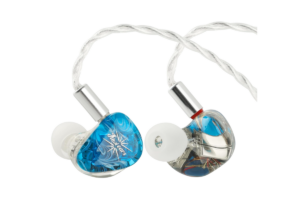
Find them here: Check Linsoul Kiwi Ears Orchestra Lite price on Amazon
What About Price?
My EW300s are around the $80 range.
For that money, I’ve gotten audio I’m completely happy gaming with.
But you have to consider the whole setup.
If you spend $80 on IEMs and then realize you also need a $70 microphone, suddenly your “$80 gaming audio setup” isn’t $80 anymore.
That’s why comparing product prices directly can be misleading.
A $100 gaming headset might include:
- Headphones
- Microphone
- Wireless connectivity
- Volume controls
- Software
- Everything you need
An $80 pair of IEMs might primarily solve the listening side.
If you already own a microphone, though…
I’d personally take the IEMs.
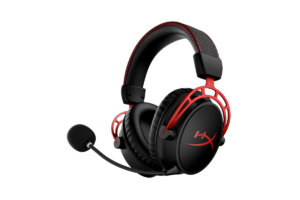
Get them here: Check HyperX Cloud Alpha price on Amazon
If You Have $100, Which Should You Buy?
Here’s how I’d answer this if a friend asked me.
“Do you need a microphone?”
If the answer is yes and you don’t already own one:
“Buy a gaming headset.”
- Get everything you need.
- Game.
- Have fun.
- Stop shopping.
If you already own a standalone microphone or you don’t need a microphone at all?
I’d buy IEMs.
Especially if comfort, heat or glasses have been problems with your current headset.
Check out my Best Gaming Headsets Under $100 in 2026: 8 Worth Buying
Which Is Better for Streaming?
This depends almost entirely on your microphone situation.
For a brand-new streamer, I actually think a gaming headset makes a ton of sense.
You’re trying to figure out:
- OBS
- Cameras
- Scenes
- Lighting
- Audio
- Streaming settings
…and everything else at once
A headset gives you headphones and a mic.
One problem solved.
That’s valuable.
Once you move to a standalone microphone, though, the headset microphone becomes mostly irrelevant.
That’s what happened to me.
Once I had my FIFINE mic, there wasn’t much keeping me attached to a traditional gaming headset anymore.
At that point I could choose my audio entirely based on what I wanted to hear and what was comfortable.
That’s when the EW300s took over.
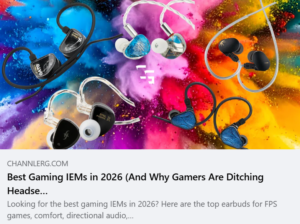
Here are my Best Gaming IEMs in 2026 (And Why Gamers Are Ditching Headsets)
Gaming Headsets vs. IEMs: Which Would I Choose?
Today?
IEMs. Easily.
I’m going to have a very difficult time going back to traditional over-ear gaming headphones.
Not because IEMs made me better at Siege.
Not because they completely destroyed my HyperX in sound quality.
They didn’t.
It’s because I get excellent sound without the weight, heat and pressure around my glasses.
But if I were starting over with $100 and didn’t own a standalone microphone?
I’d buy the headset.
That’s what I did the first time, and I still think it was the right decision.
A good gaming headset is simple.
- You get solid audio
- A microphone
- & potentially wireless connectivity in one package
Then if you eventually start streaming more, buy a dedicated microphone, or simply get sick of having giant headphones strapped to your head, start looking at IEMs.
That’s the upgrade path that worked for me.
And now that I’ve made the switch?
I don’t see myself going back.